
The X-ray–to–UV correlation of quasars
across different cosmic epochs
New results from eROSITA-DE suggest that the connection between quasar discs and their X-ray coronas evolves with the age of the Universe.
Inferred X-ray–to–UV correlation of quasars across different cosmic epochs.
The coloured lines represent distinct redshift intervals (as indicated in the legend), tracing how the relation evolves with cosmic time. Light shaded bands around each line indicate the 68% (1σ) confidence interval of the median correlation. The complex, convex shaded regions show density contours corresponding to the combined posterior distributions of individual quasars in the LX(2 keV) – Lν(2500Å) plane for each redshift bin. The inner areas enclosed by the 1σ iso-density contours are intentionally left blank for visual clarity. A typical intrinsic scatter of σ ≈ 0.4 dex around the correlation is illustrated by the grey vertical bar in the upper-left corner.
The connection between the accretion disc and the X-ray–emitting corona of bright quasars (QSOs) may have evolved over the history of the Universe, according to a new study based on data from the eROSITA-DE survey — the German-led half of the all-sky X-ray survey performed by the SRG/eROSITA telescope.
An international team of astrophysicists has found that quasars with the same optical or ultraviolet (UV) brightness emit relatively more X-rays at higher redshifts, when the Universe was younger. The discovery suggests that the physical processes linking the accretion disc and the corona around supermassive black holes may have changed over billions of years.
The study combines X-ray observations from eROSITA-DE’s first all-sky scan (eRASS1) with multiwavelength data from several surveys, including optical data from the Sloan Digital Sky Survey (SDSS) Data Release 16 and archival XMM-Newton observations. Among these, eROSITA’s wide and uniform X-ray coverage proved decisive, enabling the team to study quasar populations on a scale never before possible.
“Confirming a non-constant X-ray–to–UV relation with cosmic time is quite surprising and challenges our understanding of how supermassive black holes grow and radiate,” says A. Georgakakis, one of the study’s authors. “We tested the result using different approaches, but it appears to be persistent.”
The light from black holes
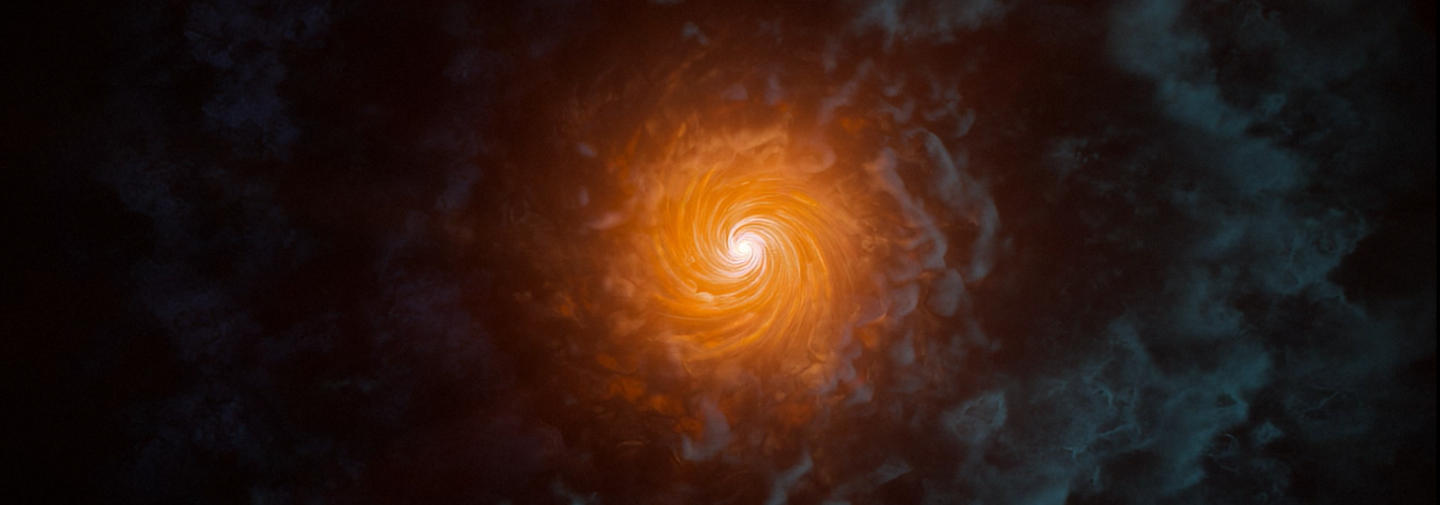
Quasars shine across the entire electromagnetic spectrum. At their core lies a supermassive black hole surrounded by an accretion disc of gas and dust. As material spirals inward, it heats up and emits UV radiation. Some of these photons interact with a region of hot plasma close to the black hole — the corona — which boosts their energy into the X-ray regime through inverse Compton scattering.
Because the disc provides the seed photons for the corona, their emissions are tightly connected: brighter UV light usually means stronger X-ray output. This correlation has long been considered a universal property of quasars, unchanged across cosmic time — an assumption the new findings now question.
Implications and what’s next
The stability of the X-ray–to–UV relation underpins methods that use quasars as “standard candles” to probe cosmology. While the new results do not undermine that approach, they highlight the need to test this assumption carefully as larger and deeper samples become available.
“The key advance here is methodological,” adds Maria Chira of the National Observatory of Athens, leading author of the paper. “eROSITA-DE’s survey is vast but relatively shallow — many quasars are detected with only a few X-ray photons. By combining these data in a robust Bayesian statistical framework, we could uncover subtle trends that would otherwise remain hidden.”
The full set of eROSITA all-sky scans will soon allow astronomers to probe even fainter and more distant quasars. Future analyses using these data — together with next-generation X-ray and multiwavelength surveys — will help reveal whether the observed evolution reflects a genuine physical change or simply selection effects. Such studies will bring new insight into how supermassive black holes power the most luminous objects in the Universe, and how their behaviour has evolved over cosmic time.